Gurgaon has already proved it can lease fast, scale teams quickly, and attract global names. The next question is not “Will companies come?” It is “What kind of buildings will they now demand?”
That answer is getting clearer. Across top micro-markets in Gurgaon — Cyber City, Udyog Vihar, Golf Course Extension, SPR, the Dwarka Expressway belt — we are watching three forces shape leasing conversations in real time:
- PropTech built into the building, not bolted on later
- ESG and resilience moving from a “nice to have” to a board-level checkbox
- Smart, hybrid-ready, people-first floor plates that are designed for actual work and client experience, not just for a brochure
This is no longer future talk. It is already affecting which towers get shortlisted, how fast floors are absorbed, and the premiums tenants are willing to pay for reliability. Below is how each force is playing out in Gurgaon — and what you should do if you are signing or expanding in 2025.
PropTech is no longer a gadget, it is infrastructure
PropTech used to mean one shiny dashboard that nobody opened after week one. That era is done. Today, enterprise tenants in Gurgaon are asking for an integrated layer that quietly runs access control, meeting room booking, guest management, utilisation tracking, energy monitoring, and even AV readiness. In other words, PropTech is now an operating layer, not a demo.
This shift shows up clearly in JLL’s India Office Market Dynamics for Q2 2025, where they track how global occupiers and GCCs are driving record leasing and treating workspace as an operational platform, not just a cost line. The theme is consistent: heads of CRE and admin are re-scoping offices as managed environments instead of static assets. What matters most is not just how the space looks but how it runs on anchor days.
For Gurgaon this has immediate leasing impact. If a building has bad access control, badly tuned HVAC, or broken hybrid rooms, high-value teams simply skip it — even if the shell looks premium. On the other hand, if a floor “just works,” that floor will lease first even if the rent is slightly higher.
This is why many occupiers now prefer a single accountable partner who delivers design, build, tech, and daily operations under one calendar. If you want that one-owner model — instead of chasing five vendors and hoping the handover happens on time — start with managed offices in Gurgaon by AIHP and benchmark a 60–90 day go-live path against the slow, multi-vendor version.
ESG and resilience have quietly become non-negotiable
A few years ago, ESG language in Gurgaon sounded like marketing. Now it sounds like risk control. Boards, global compliance teams, and even customers are asking questions like:
- Is this building energy efficient in real daily use or just on paper?
- How robust is the backup and drainage during heavy rain?
- Can we show clients that we are sitting in a responsible, future-proof environment?
If you follow the way certification bodies talk about India, especially in resources published by the U.S. Green Building Council on LEED and performance, you can see the pivot: ESG is not framed as “good optics,” it is framed as operational resilience and cost discipline.
In Gurgaon, you feel this pressure after every heavy monsoon week. Nobody wants to bring clients to a lobby with water pooling near the lift bank. Nobody wants the basement power room to go offline in the middle of a deal call. After the last few high-rain cycles, more landlords have started front-loading drainage logic, envelope performance, and energy tracking because these are now part of the leasing pitch.
We have already written in depth about this shift toward resilience, hybrid-readiness, and high-speed delivery in Top 5 Trends Shaping Gurgaon’s Office Market in 2025 — and those same trends are exactly what ESG screening now rewards. When the building can prove it will stay open, comfortable, and presentable in rough weather, it moves straight to the top of the shortlist for serious tenants.
Smart offices are not “futuristic,” they are simply built for how people actually work now
There is a big misconception in the market that “smart office” means some sci-fi control room with gesture walls and drones serving coffee. The reality is much simpler and much more practical.
In Gurgaon, a smart office in 2025 does a few things with zero drama:
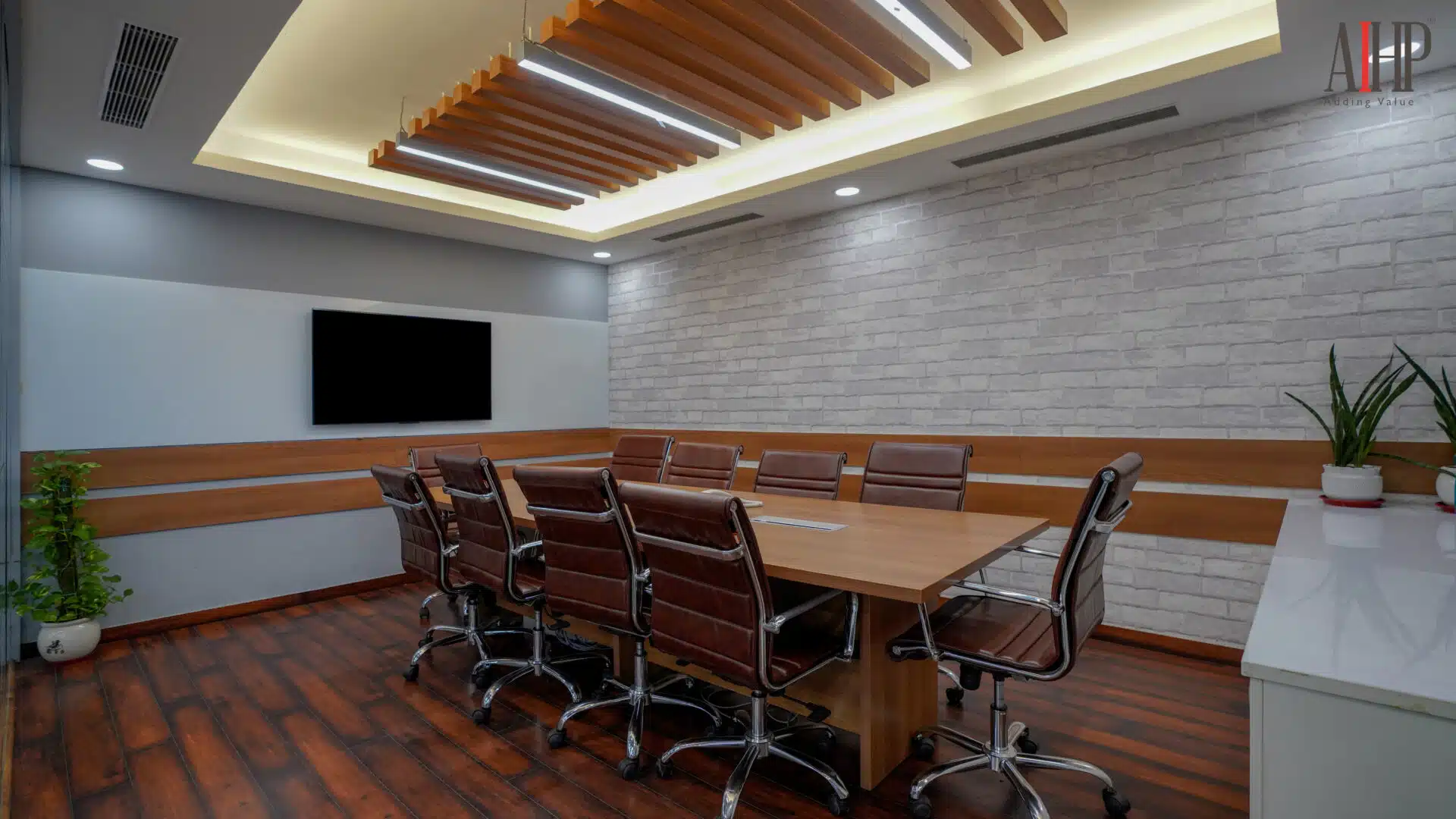
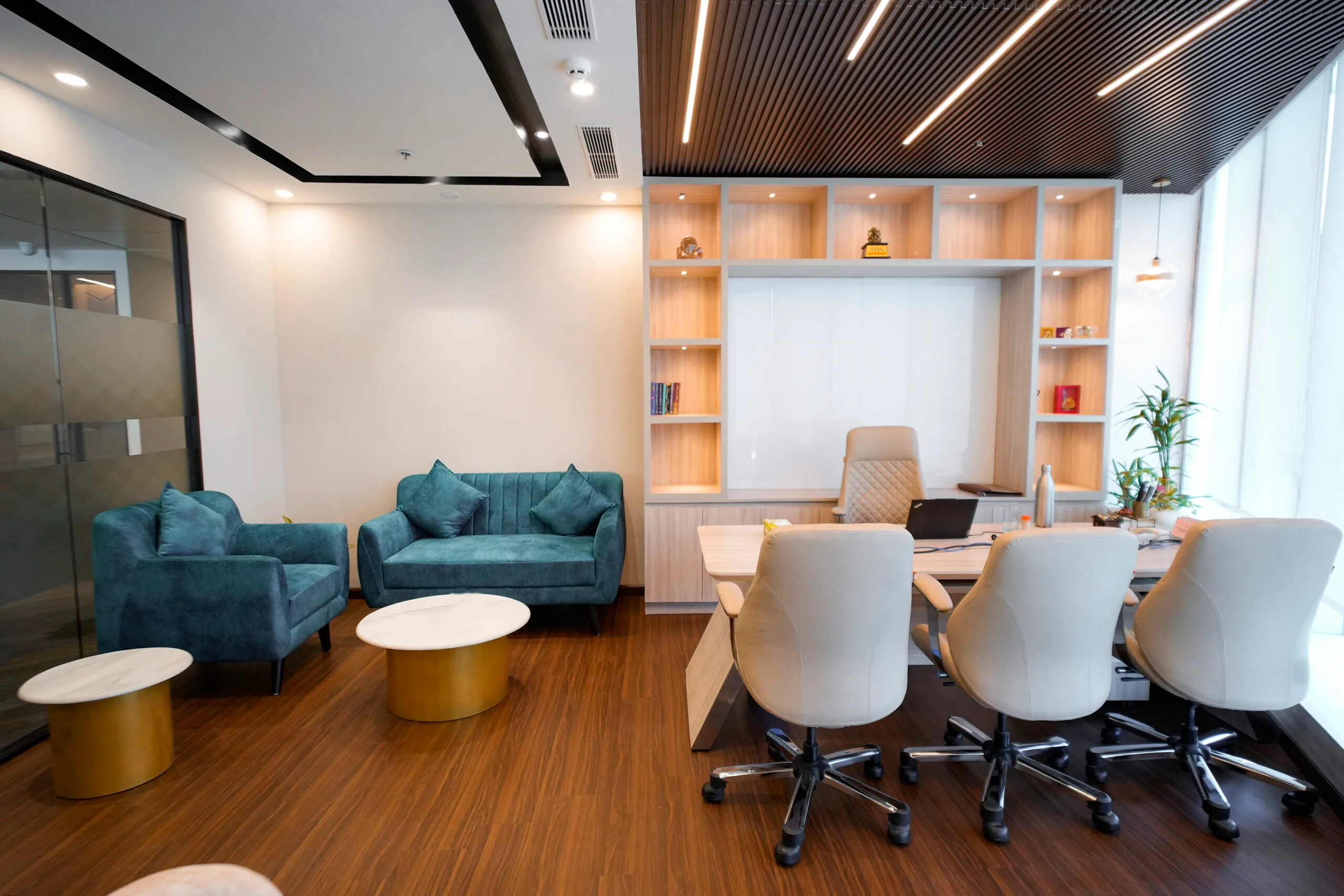
- It supports hybrid meetings without friction. Medium rooms have dual screens, clean audio, and people-framing mics so remote colleagues are actually in the room, not just background noise on a laptop speaker.
- It protects focus. Phone pods sit close to busy teams so urgent calls don’t spill across bays. There are more two- and four-seat rooms instead of one giant boardroom that nobody wants to book for a 20-minute problem solve.
- It respects arrival. The first 5 minutes — access control, lift wait time, signage, lighting, where guests sit — feels calm instead of chaotic.
- It treats data like a tool, not a trophy. Occupancy heat maps tell you how to rebalance your seating mix before people start complaining, not after.
The reason this matters commercially is simple: companies are shrinking wasted square footage while improving experience on peak in-office days. That model is now standard in Gurgaon’s most competitive floors. And landlords who cannot deliver that experience are already seeing their spaces slip to second-tier status, even if the glass looks great from the road.
Local office coverage in ETRealty’s office and workplace reporting has repeatedly pointed out that employers are no longer hunting for “the biggest floor,” they’re hunting for the most “usable” floor — one that performs on hiring days, client days, and board-review days without the admin team firefighting all morning.
How this shapes leasing in Gurgaon’s core and growth corridors
If you look at Cyber City, Udyog Vihar, Golf Course Extension, SPR, and now even the Dwarka Expressway belt, you’ll notice the same behaviour pattern repeating:
- Prime blocks near strong access or future mass transit start getting pre-committed early.
- Expansion rights in-building (first right of refusal on the next floor) are now part of the first negotiation, not an afterthought.
- Landlords who can prove uptime, ESG performance, hybrid-ready rooms, and a reliable 60–90 day delivery path are getting faster yes/no decisions.
This is why built-to-suit and managed delivery models are winning deals that, a few years ago, would have gone through a traditional, slower multi-vendor fit-out. Decision-makers don’t want to “project manage an office.” They want to buy an outcome.
If that is your mindset, it helps to begin not with square footage, but with timing and continuity. Ask:
- Can we start this quarter, not next year?
- Can we scale 20 to 30 percent more seats in the same building without moving?
- Can we walk a client in on a rain day and feel proud?
When the answer is yes, cost per square foot becomes just one line item instead of the only line item.
What should be in your 2025 brief (and what should not)
Here is how smart tenants in Gurgaon are now writing their internal brief before they even tour:
Must-haves
- One accountable delivery partner (design / build / tech / facility ops)
- Hybrid-ready meeting rooms already commissioned and tested
- Documented ESG and uptime story, not just a glossy claim
- Strong arrival experience and predictable last mile access
- Expansion rights in-building
No tolerance for
- “We’ll figure AV later”
- “We’ll get crisper access control after you move in”
- “We can’t share energy and utilisation data at the moment”
- “There’s some water logging but it usually clears”
- “Your floor is ready in theory, but the lift bank still needs work”
By the time you’re walking sites in Gurgaon, these red flags are the difference between a clean 90-day ramp and six months of pain.
The playbook for the next 90 days
If you’re actively scouting, here’s how real teams in NCR are navigating high-demand sub-markets without losing time:
- Tour at peak hour, not Sunday afternoon. Check the last 300 metres of the approach, the lobby queue, and the lift wait. That “walk + entry” is what your clients and new hires will remember.
- Insist on expansion rights in the first draft. Don’t “circle back later.” The floor next door will be gone by then.
- Pilot one hybrid room before signing the full floor. Ask the operator (or landlord, if turnkey) to let you run a real call from a sample room — with your team, not theirs. Listen to the audio. Look at the framing. If that room works, you know the template can scale.
- Write service levels into the deal. Handover milestones, AV commissioning, uptime targets. Dates hold when everyone agrees what happens if they do not.
- Benchmark managed vs. traditional honestly. A managed path can look slightly more expensive at first glance, but if it gets you live 60–90 days sooner, that time delta is often worth more than the rupee delta.
To see what a turnkey delivery path actually looks like when one team owns the full chain, you can start with managed offices in Gurgaon by AIHP and pressure-test calendars and expansion logic against your hiring plan.
And if you want to go deeper into how Gurgaon’s leasing story is evolving through PropTech, flex models, ESG pressure, and mixed-use formats, read our breakdown on Top 5 Trends Shaping Gurgaon’s Office Market in 2025 — it’s a useful warm-up before site walks because it helps you ask sharper questions in the room.
From there, the next step is simple. If you’re serious about timelines, start by exploring office space in Gurgaon so we can map your brief into rooms, milestones, and a start date that holds.