In Gurgaon, premium office demand is getting more practical every quarter. Companies are not paying more only for a good looking lobby or a famous corridor. They are paying for buildings that perform well on hot days, run with fewer breakdowns, and make hybrid work feel smooth on peak days. That is where sustainability and smart building capability come in. They are no longer add ons. They are becoming the new baseline for Grade A choices.
Across India, green certified Grade A stock has grown sharply since 2019, and developers are actively building to certifications like LEED, IGBC, and GRIHA because occupiers are asking for it.
Why “green” and “smart” now sit at the centre of premium demand
In Gurgaon shortlists, the definition of premium has shifted from image to outcomes. Three outcomes show up again and again in board and leadership conversations.
Lower operating volatility
Energy, water, and maintenance costs hit budgets every month. Buildings that manage consumption better and catch issues early tend to keep costs steadier. That matters a lot more now because CFOs are tracking total cost of occupancy, not just rent.
Comfort that stays stable in real conditions
People remember the day the cooling struggled or the lifts kept getting stuck. A building that holds comfort through peak summer and peak occupancy feels premium without needing extra marketing.
Daily experience that makes attendance easier
Hybrid work is stable now, but peak days are intense. If meeting rooms fail, WiFi drops, or the noise level rises, people stop enjoying the office. Better building systems and smarter operations reduce that friction.
Sustainability trend 1: Green certifications are becoming a real filter, not a brochure badge
More occupiers are asking direct questions about certification, and not just “is it certified.” They want to know what it changes in day to day performance.
LEED and GRIHA are both important now
LEED is widely recognised, especially by global companies. GRIHA is India’s own national rating system focused on holistic environmental performance across a building’s life cycle.
This matters in Gurgaon because the tenant mix includes global firms and Indian enterprises. A building that can speak both languages of performance, global and national, usually feels more credible to a wider range of decision makers.
What occupiers in Gurgaon typically ask for in 2026
Instead of broad questions, the better shortlists ask specific ones like these:
- How is energy measured and managed, and can the tenant see usage clearly
- How is water reused and monitored
- How stable is indoor comfort during peak summer loads
- What is the plan for preventive maintenance and reporting
These questions are not “ESG theatre.” They directly affect cost, comfort, and uptime.
Sustainability trend 2: GRIHA is rising in relevance for Indian occupiers and long term projects
GRIHA carries weight because it is built around Indian climate and operational realities, and because it benchmarks building performance using nationally accepted parameters. In Gurgaon, that relevance shows up in two ways:
- Indian enterprises and regulated sectors often appreciate a framework designed for Indian conditions
- Long term occupiers care about performance consistency, not only brand optics
If you are selecting a campus for five to seven years, stable performance matters more than a fancy one time fit out.
Smart trend 1: Smart building systems are becoming the invisible premium
A sustainable building reduces waste. A smart building reduces friction. The best assets are combining both.
Facilities moving from reactive to predictive
When systems are connected, issues show up earlier and get fixed faster. Sensors and building management systems help identify patterns in energy use, temperature zones, and equipment health. JLL’s India view on how IoT and AI are reshaping facility management is a good primer on why this is becoming standard in modern offices.
In practical terms, it reduces the small failures that ruin a day:
- Meeting rooms that overheat
- AC zones that never match actual occupancy
- Access control glitches on peak hours
- Frequent lift complaints with no clear root cause
Smart access and visitor flow
Premium demand is also being shaped by how smoothly a building handles people. Faster visitor check in, reliable access control, and clean wayfinding save time every day. For client facing teams, this becomes part of brand impression.
Smart trend 2: Sub metering and usage transparency are now expected
More occupiers want visibility, not guesses. Sub metering and dashboards allow:
- More accurate cost allocation
- Faster troubleshooting when bills spike
- Better tenant side sustainability reporting
In 2026, it is common to see this as a checkbox in shortlisting documents, especially for GCCs and larger Indian corporates.
What this looks like in Gurgaon: two real certification examples
To make the conversation less abstract, here are two examples that match what premium occupiers are asking for now.
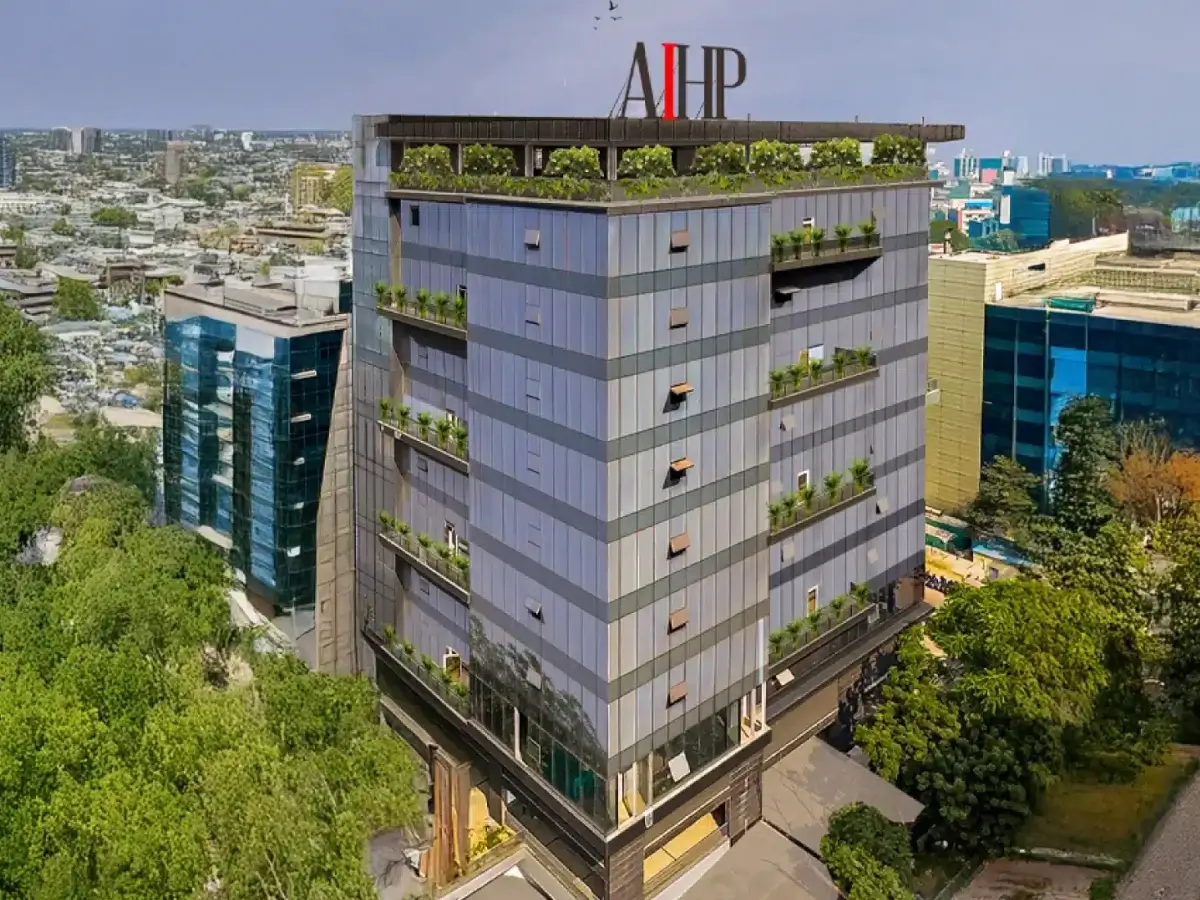
AIHP Skyline: LEED Gold certified
AIHP Skyline is positioned as a LEED Gold certified building, which typically signals strong performance intent around energy efficiency and environmental standards. You can see the certification called out directly on the building page for AIHP Skyline.
AIHP Millennium: GRIHA 4 Star certified
AIHP Millennium is described as a GRIHA 4 Star certified building on its building page for AIHP Millennium.
The bigger point is not which label is “better.” It is that premium occupiers are now responding to buildings that can back claims with recognised frameworks, whether that is LEED or GRIHA, and then deliver stable comfort and operations daily.
Why these trends are pushing premium demand specifically in Gurgaon
Gurgaon is a performance market. A large share of demand comes from sectors where downtime has real cost: GCCs, tech, BFSI, and high growth businesses. If the building underperforms, it affects:
- Attendance and retention
- Meeting quality and collaboration
- Client experience
- Monthly costs and operational effort
Also, the competitive set in Gurgaon is strong. When there are many decent options, the differentiator becomes reliability. Buildings that are better managed, better monitored, and more efficient feel safer to choose.
What occupiers should do: a shortlist checklist that works in real life
Instead of getting stuck in buzzwords, use a checklist that maps to outcomes.
Building performance questions
- Ask what is monitored regularly and what is only claimed
- Ask how comfort stability is managed in peak summer conditions
- Ask for clarity on energy and water measurement at tenant level
Smart readiness checks
- Ask which systems are integrated and what is still manual
- Ask how issues are detected and escalated, and what response times look like
- Ask for one real example of predictive maintenance or proactive fixes
Workplace experience checks
- Walk the building around peak hour, not mid day
- Stand near meeting rooms and corridors to understand noise behaviour
- Check lift wait times and reception flow
If you are also trying to reduce move in risk and keep timelines tight, a ready option like fully furnished office space in Gurgaon can help you start from a baseline where operations and infrastructure are already set, and then customise what truly matters.
What landlords and developers should prioritise to win premium demand
The owners and developers winning better tenants in Gurgaon are doing four things consistently.
Performance transparency
Occupiers want dashboards, sub metering, and clear reporting. “Green” without evidence is starting to feel weak.
Comfort stability
In Gurgaon summers, comfort stability is premium. Better HVAC planning and disciplined maintenance show up as fewer complaints and stronger renewals.
Integrated operations
Smart systems fail when operations do not match. Buildings that treat operations as a product, not an afterthought, win trust.
Hybrid ready infrastructure
Even the best building loses if tenant floors do not work. Good acoustics, reliable connectivity, and proper room ratios matter more than décor.
If you want to evaluate a Gurgaon shortlist with these filters and match it to your headcount and meeting intensity, route it once through the AIHP contact page and keep the discussion focused on outcomes, not only rent.
Conclusion
Premium demand in Gurgaon is increasingly being driven by performance. At a national level, Grade A green certified office stock has jumped sharply, and certifications like LEED and GRIHA are becoming mainstream because occupiers are choosing them. The Economic Times In parallel, smart building practices are raising expectations around uptime, comfort stability, and operations.
For 2026, the simplest takeaway is this: shortlist buildings that can prove performance, not just claim it, and you will end up with an office that feels better for employees and more predictable for finance.