The headline this quarter is loud and clear. Delhi NCR’s office market is in full stride and Gurgaon is shouldering most of the work. Roughly seven out of every ten square feet leased in Q2 2025 landed here. That kind of concentration does not happen by accident. It is a combination of decision maker density, floors that can scale, strong last mile, and operators who can hand over on real calendars. If you are planning a rollout in 2025 the question is not whether Gurgaon is hot. The question is how to capture the momentum without slipping dates or paying for seats you will not use.
This article breaks down the surge, shows where demand is pooling, and offers a practical playbook for moving fast with control. It also sets expectations on rents, vacancy, and fit out timelines so you can plan with fewer surprises.
NCR’s surge at a glance
Across the region, both net absorption and gross leasing rose sharply year on year… If you want a clean baseline for the numbers behind Gurgaon’s share and the quarter’s sector mix, the city pages inside Cushman & Wakefield’s MarketBeat India are a good starting point. Read those charts as signals rather than predictions. They will not tell you everything about your micro market, but they explain why site tours are busier and why the better floors go to decision ready tenants.
From a national lens, the momentum is consistent with a broader upswing in Indian office demand. That backdrop matters because Gurgaon tends to outperform when the national tide rises. The city’s advantage is a concentrated network of buyers, partners, and talent that makes it easier to scale in place.
Why Gurgaon is taking seventy percent of the quarter
Three forces are working together.
Decision density. Senior buyers, global capability centers, consulting majors, and allied vendors are within a short drive of each other. That cuts evaluation time and improves vendor response. You can feel this on the ground. RFPs move faster and approvals do not sit in limbo for weeks.
Floorplates that scale. Large contiguous floors are easier to find in Gurgaon’s prime and near prime corridors. Growing teams avoid split footprints and the internal friction that comes with them. This is especially important for engineering and services teams that hate being split across buildings.
Execution speed. More shortlists now include plug and play or managed options… If you’re looking for a quick, forward-looking primer on what’s driving decisions, our recent explainer Top 5 Trends Shaping Gurgaon’s Office Market in 2025 connects PropTech, green design and flex with leasing outcomes you can plan around.
Micro market map you should expect
Gurgaon’s leading corridors play different roles and each of them has a pattern you can plan around.
Cyber City. Prestige addresses, heavy renewal activity, and an early pipeline of pre commits keep the best blocks tight. This is a good fit for leadership hubs and teams with a steady flow of client meetings.
Udyog Vihar. Strong value to velocity equation, dependable inventory, and quick access to NH8. This is ideal for product, support, and transition teams that need reliable uptime and steady cost.
Golf Course Road and Golf Course Extension. Amenity rich environments that suit professional services, product, and design teams. These corridors shine when you want a polished arrival experience and client facing rooms that do not need much customization.
Southern Peripheral Road and the expressway belt. Fresh Grade A supply and campus scale opportunities with room to expand. These pockets reward teams that can move early and secure options for the next phase.
Treat these corridors as a portfolio rather than rivals. Many companies run a prime client hub in one and a larger operational hub in another. The mix keeps rent sensible and commute realistic.
Demand by sector, not one spike
The quarter was not carried by a single industry. Tech and IT enabled services stayed strong, but professional services and engineering led demand also grew. This kind of balance matters. It supports steadier renewals and reduces the chance that one sector’s slowdown derails your plans. It also means landlords feel confident enough to pull forward lobby upgrades and to commission better hybrid rooms as a baseline rather than an upgrade.
When you read sector charts, look for consistent spreads rather than one big number. A healthy spread translates to more predictable leasing through the rest of the year.
Pricing and vacancy: what is really moving
Sticker rents always lag. Effective rent moves first. Incentives narrow, rent free periods shrink, and handover schedules firm up when landlords sense a strong quarter. If you want a region wide context for how these pressures are building, the trend pages inside JLL India research offer a useful lens, especially when you are modeling the difference between quoted rates and what your total monthly outgo will be once you add services and fit out support.
In the best stacks near transit and NH8, vacancy tightens early. That tightening rarely shows up fully in the next dashboard. It shows up at the front desk when you try to book a tour of a clean floor and you hear this line. We can show it to you, but the current tenant has a first right on the next block and we expect to conclude their option in a few weeks. Plan for that reality. Secure options where you can and do not assume that what looks available on paper will still be available when you return.
On the ground signals that matter
Dashboards are helpful. What you really want is the feel of the market. That is where local reporting helps, especially on enterprise deals and renewals that point to where the next wave of demand might land. The office desk at ETRealty is good for this color. Read it with a simple question in mind. Which addresses are winning follow on demand after a marquee lease. Those are the floors that will firm up first. Those are also the floors where speed matters more than shaving a small amount from the rate card.
Another signal is how fast landlords are moving on arrival experience. When you see signage, lighting, and access control upgrades racing ahead of schedule, it is because the building is close to fully committed and the owner wants it to look ready for the next site walk.
What a Gurgaon ready floor looks like this year
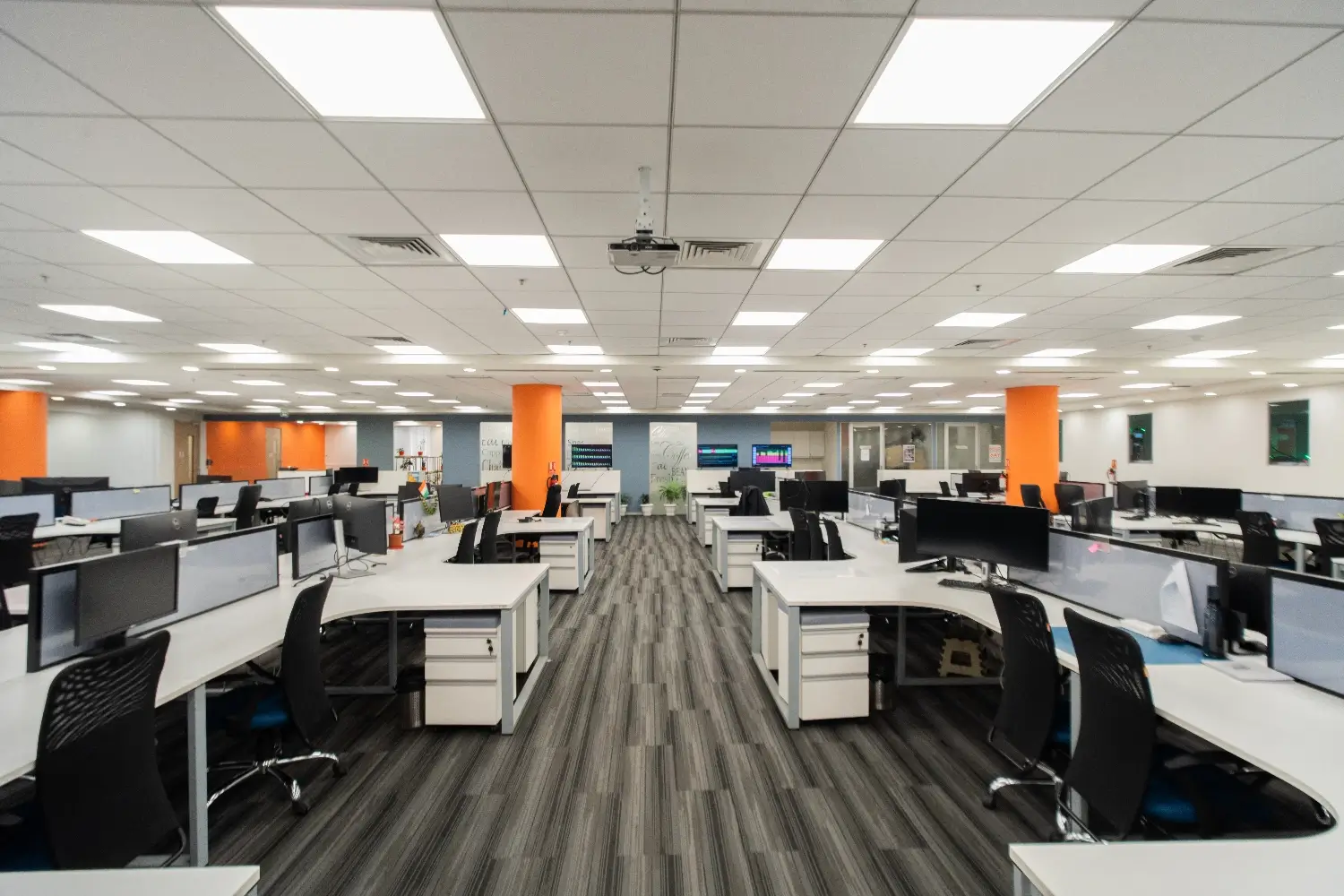
You will notice a quiet shift in fit out choices. More small rooms, fewer oversized boardrooms. Medium rooms that handle hybrid calls without drama. Phone pods near busy teams so quick client calls do not spill across the bay. These are not luxuries. They are the things that make anchor days feel smooth and keep your teams from avoiding the office because the experience is poor.
Arrival is another focus. Clear wayfinding, fast access control, reliable lifts, and a lobby that feels welcoming at peak hour. Small touches like well placed signage and lighting reduce the friction your visitors feel. When the experience is good, you do not need to overspend on front of house finishes. The system does the work.
Delivery options: managed versus multi vendor
Many teams are deciding between a traditional route and a managed route. In a calm market both can work. In a busy quarter a managed path often protects the calendar. A single accountable partner owns design, build, tech, and operations. That reduces drift and gives you a single weekly checkpoint. If that is the route you are weighing, begin the conversation on AIHP’s managed offices in Gurgaon and benchmark a 60 to 90 day start against the best multi vendor plan you can assemble. The comparison will tell you whether the speed premium is worth it for your team.
If you prefer a custom build, push your partners to commit to a room by room commissioning sequence rather than a single handover date. Commission the first medium room early, test it with real meetings, fix audio first, and then replicate the pattern across the floor.
A practical checklist for the next ninety days
Tour two sub markets at peak hour. Judge commute by real time, not distance on a map. If your team will hate the last mile on a rainy evening, pick another address.
Secure expansion rights in the same building. Make it part of the main term sheet. The biggest regret is losing the floor next door and being forced to move mid cycle.
Pick your delivery path early. Turnkey managed or traditional multi vendor. Both can work. The worst option is to start as one and drift into the other without clear ownership.
Hold a modest flex buffer. Ten to fifteen percent swing seats are cheaper than paying for a second site you do not need.
Lock service levels. Put uptime, handover milestones, and AV commissioning into the agreement with remedies for misses. Dates hold when everyone knows what happens if they do not.
Pilot one hybrid room. Two weeks of real calls will teach you more than any spec sheet. Use the lesson to tune the rest of the floor.
What this means for your 2025 budget
Rents will not explode, but the best addresses will firm. That is the pattern in every quarter that looks like this. Plan for a little headroom rather than counting on a discount that may not come. Shift effort from shaving a tiny amount per square foot to gaining four weeks of earlier start. Earlier revenue and momentum will outweigh a minor rate difference.
When you budget, separate headline rent from the total cost of getting work done. That means furniture, tech, services, and the cost of time if your calendar slips. If a managed path removes eight weeks of delay, the arithmetic often favors it even if the sticker looks a little higher.
Conclusion and next steps
Gurgaon is doing the heavy lifting for NCR this quarter. Seventy percent of leasing is not a blip. It is a signal that the city’s grid of decision makers, scalable floors, and dependable operators is still the safest bet for teams that need to move quickly. If you want to turn intent into a start date, keep the plan simple. Tour with a stopwatch. Secure options early. Choose a delivery path that keeps the calendar honest. Design rooms for the work your team actually does, not for a picture in a brochure.
If you are ready to translate this into a week by week plan tied to hiring and client dates, book a consultation and we will map seats to milestones so you can start on time and scale in place.