 Workspace
19 May 2025 · Udit Chauhan · 6 min read

Workspace
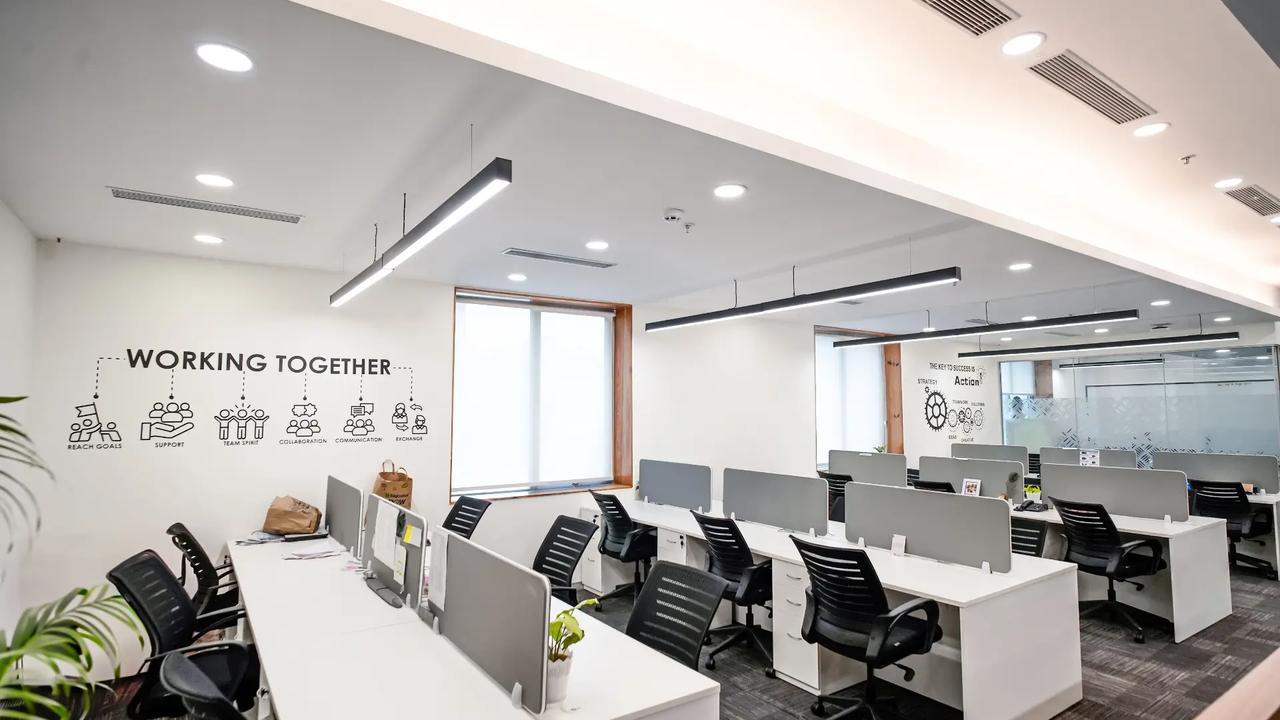
Gurgaon offices have moved away from rows of cubicles towards layouts built around how people work. This post pairs each change with a productivity statistic: activity-based layouts, smart room scheduling, biophilic design, ergonomic workstations, collaborative zones, plug-and-play offices, and smart HVAC with LED lighting. The figures come from facility-management reports, workplace surveys and aggregated case studies. It is for founders and admin heads deciding what to ask for in their next office.
Picture the old office as a flip phone: functional, yes, but painfully limited. Modern office space in Gurgaon is the smartphone—camera, GPS, social hub, and productivity machine rolled into one sleek device. With global giants and home-grown unicorns jostling for talent, companies simply can’t afford a workspace that drags people down. And employees? They know good space when they see it, as confirmed by the Leesman Index India 2024 benchmark, which ranks Gurgaon in the country’s top three cities for workspace satisfaction. The result is a city-wide race to design smarter, healthier, more inspiring offices.
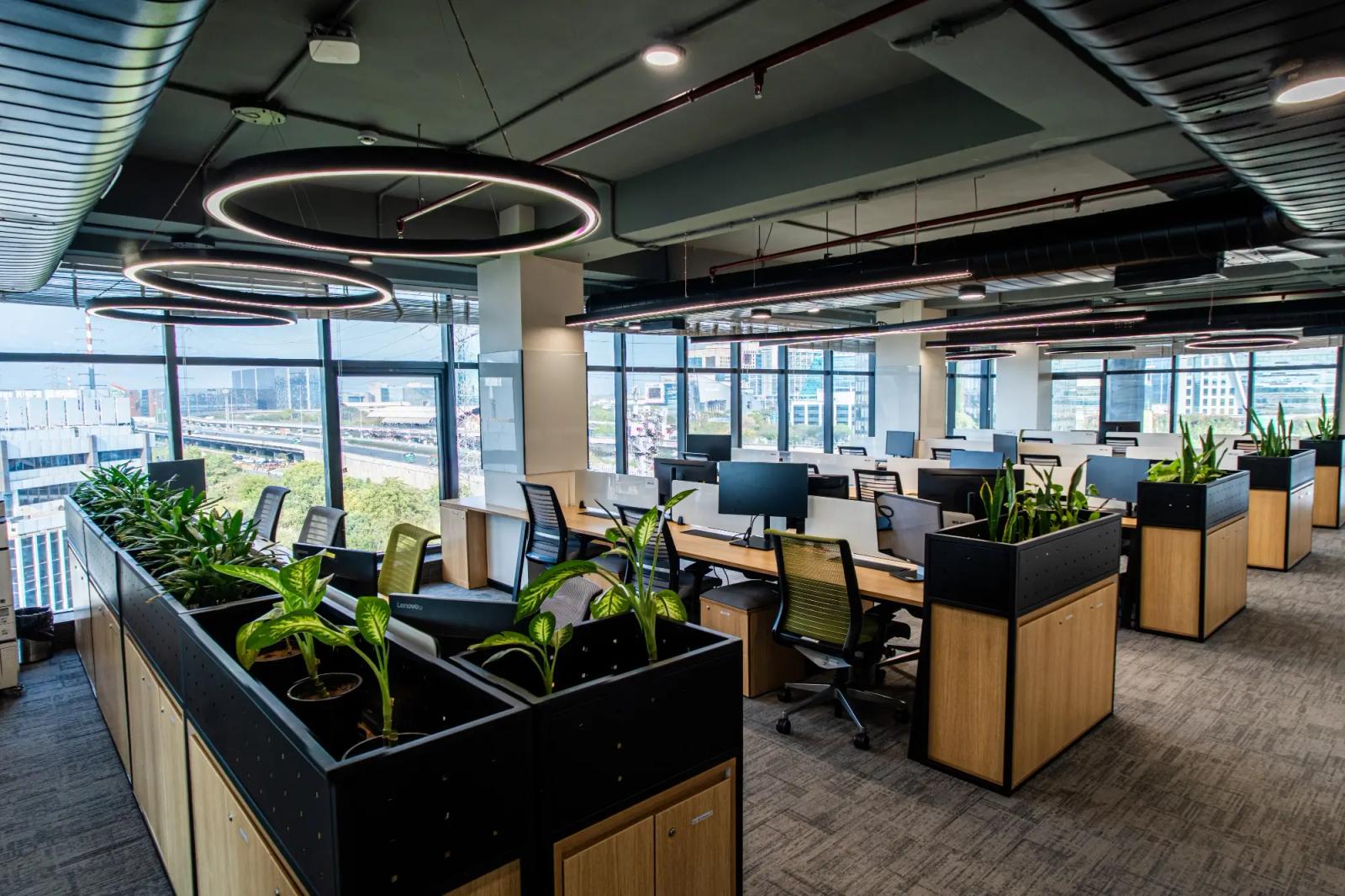
A 2024 occupancy-sensor study covering 14 Gurgaon tech firms found that teams working in activity-based layouts—zones for focus, collaboration, and relaxation—completed core tasks faster than those in traditional open offices.
Think of it as a theme park for work: quiet “library” corners for deep concentration, glass meeting pods for quick huddles, café-style lounges for brainstorming. Instead of forcing every task into one generic setting, the space flexes around the job at hand—like switching shoes for a marathon versus a ballroom dance. For a global overview of how activity-based working boosts efficiency, see this CBRE research brief on flexible environments (CBRE Workplace Report).
Ever spent ten minutes hunting for a free meeting room? Smart-booking panels and occupancy sensors slashed unproductive scavenger hunts, cutting average meeting length by nearly a third across five data-driven coworking campuses in Cyber City.
Touch-screen panels outside each room show real-time availability. If a room sits empty for five minutes of a booking, the system auto-releases it. Calendar plugins suggest optimal slots, killing the back-and-forth email ping-pong. Curious how sensors reshape corporate real estate? Explore IFMA’s 2023 IoT Facilities Report for deeper data (IFMA Knowledge Library).
HR pulse surveys at two multinational HQs on Golf Course Road revealed a rise in overall workplace satisfaction once living walls, indoor planters, and circadian-tuned lighting were installed.
Nature triggers the parasympathetic nervous system—lowering cortisol, sharpening focus. Biophilic elements act like a visual espresso shot that doesn’t crash your bloodstream. Plus, they improve indoor air, meaning fewer “post-lunch coma” jokes and more genuine energy. For the neuroscience behind this effect, skim the Harvard Business Review analysis on biophilic workplaces (HBR – The Value of Green Offices).
An insurance-sector giant retrofitted 600 desks with adjustable sit-stand converters and monitor arms. Over the next twelve months, sick-day records showed fewer absences related to musculoskeletal issues and fatigue.
A chair isn’t just a chair; it’s a mini exoskeleton. When it’s built to fit the human spine, employees stop thinking about back pain and start thinking about solving client problems. Translation: healthier bodies, sharper minds, fuller timesheets.

At a media startup in Sector 32, idea-submission data on their internal platform exploded after moving brainstorming sessions to a vibrant, art-splashed lounge instead of a sterile boardroom. Wall-to-wall whiteboards, writable glass, and soft seating sparked the imagination.
Innovation is rarely born in a vacuum; it slips out in hallway chatter or over soy lattes. Intentional collision points—wide staircases, café nooks, communal charging bars—act like matchmakers for ideas waiting to meet.
A SaaS scale-up moving into amanaged office space in Gurgaon sliced onboarding time from four weeks to two. Half the ramp-up period vanished because Wi-Fi, security passes, and IT support were ready on Day One.
Imagine building IKEA furniture every time you wanted to sit down. Traditional leases feel the same when a company doubles headcount. Plug-and-play offices hand you the chair fully assembled—allowing HR to focus on culture, not cabling.
Smart sensors regulating temperature and motion-triggered LEDs delivered an average reduction in utility costs for a banking back-office. Lower bills funded an employee-wellness stipend—talk about a virtuous cycle.
When the AC becomes the Goldilocks of climate—never too hot, never too cold—employees stop daydreaming about sweaters or siestas. Consistent thermal comfort translates into consistent cognitive performance.
Two Gurgaon-born unicorns compared turnover before and after redesigning spaces to reflect company ethos—think murals of mission statements and zones named after core values. Attrition plummeted by two-thirds, proving that space can speak culture louder than a slide deck.
If culture lives only in HR PDFs, it’s a ghost. Etch it into the walls, carve it into breakout pods, bake it into wayfinding graphics, and suddenly new hires “get it” without an orientation marathon.
Modern office space in Gurgaon pays off when the changes are ones your team uses every day: rooms they can actually book, chairs that fit, and air conditioning that keeps the floor cool without wasting power. If you want those features without paying for the fit-out yourself, AIHP's plug-and-play offices typically take about 60 days from design sign-off to move-in, for teams of 20 seats and up.
Workspace19 May 2025 · Udit Chauhan · 6 min read
 Workspace
14 May 2025 · Udit Chauhan · 7 min read
 Workspace
12 May 2025 · Udit Chauhan · 8 min read
Ready to move your team?
Managed private offices across Gurgaon, fully serviced and sized for your team.